← ALL SERVICES · 05
Blockchain
Smart contracts, DEXs, launchpads and custody — Solidity that has held real money on mainnet, from a USDT escrow to a bonding-curve launchpad, written to be audited, not admired.
SOLIDITY · FOUNDRY · HARDHAT · ETHERS.JS · NEXT.JS · NODE
WHAT WE BUILD
Smart contracts
Escrow, vesting, staking and token logic in Solidity — small surface area, checked invariants, and upgrade paths decided before deployment, not after the first bug.
DEX & DeFi infrastructure
AMM pools, routing and price logic of the kind behind GM SWAP — with slippage, MEV exposure and oracle failure treated as design inputs, not incident reports.
Token launchpads
Bonding-curve launch platforms like HYPEMINT — deterministic pricing, anti-sniping controls and graduation to a DEX pool, with the curve math tested against every edge we could name.
NFT marketplaces
Minting, royalties, lazy listings and marketplace contracts — NATHORIZON's stack — plus the indexing and metadata plumbing that makes an NFT product usable, not just deployable.
Wallets & custody
Key management, signing flows and custody built on our WALLET SDK — non-custodial by default, MPC or multisig where the threat model demands it.
Web3 plumbing
Indexers, subgraphs, RPC failover and the Next.js frontends that sit on top — because a contract without a reliable read path is half a product.
HOW IT RUNS
01
Chain & threat model
We pick chain, token standards and custody model against your actual threat model — and write down what an exploit would cost.
02
Contracts on a fork
Solidity written against mainnet forks with invariant and fuzz tests — every state transition exercised before anything touches a public network.
03
Audit & testnet
Internal review, external audit where the funds warrant it, then a testnet run with the real frontend — findings fixed, not waived.
04
Mainnet & monitoring
Staged deployment with timelocked admin keys, on-chain monitoring and a written incident runbook — because mainnet has no rollback button.
MOXAT
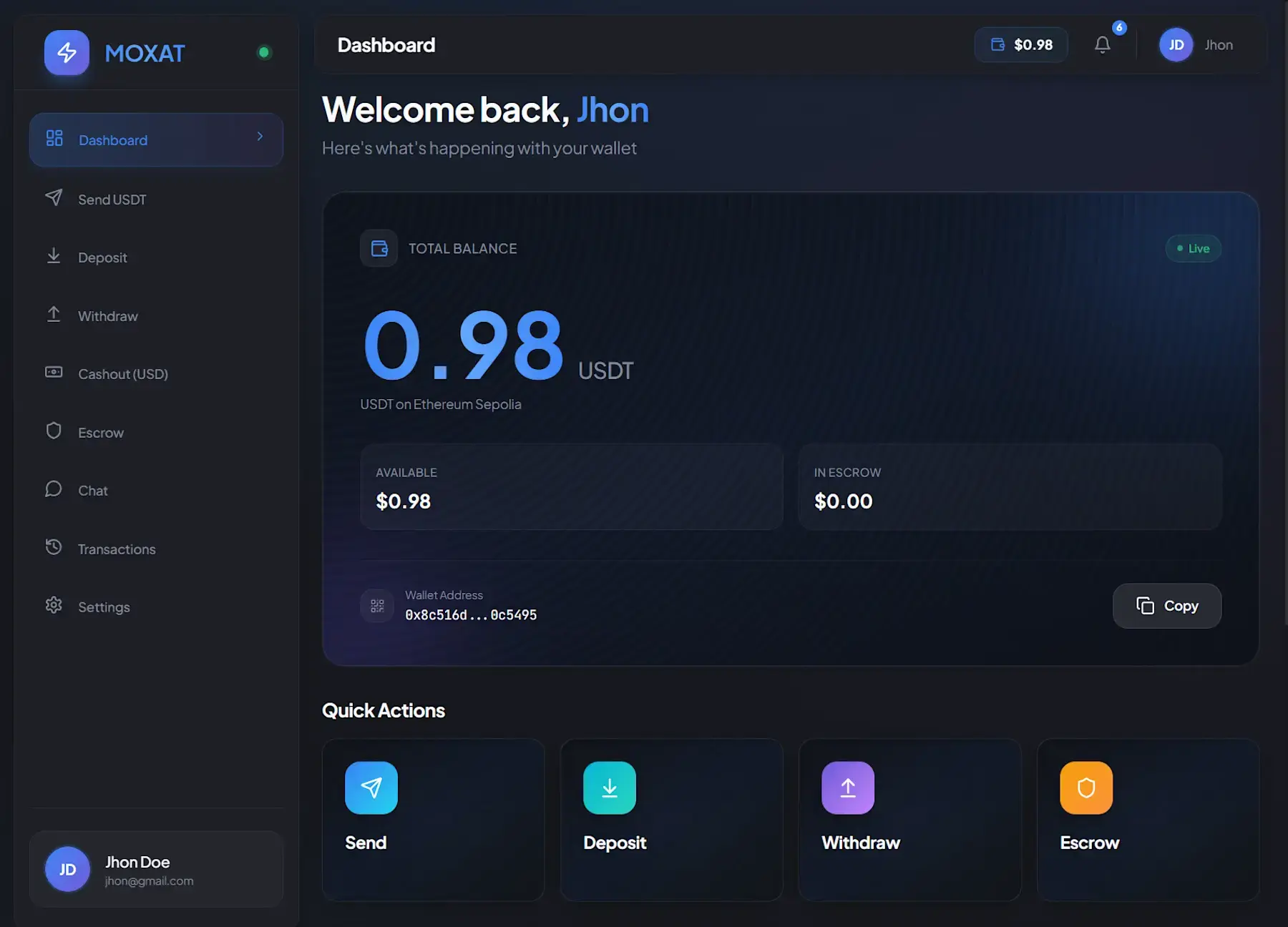
Custodial USDT payments and escrow for high-trust transactions — wallet infrastructure, automated escrow workflows, dispute-safe release. Money that moves only when the pattern says so.
DISPUTE PATH — FUNDS HOLD → ARBITRATED RELEASE
GM SWAP
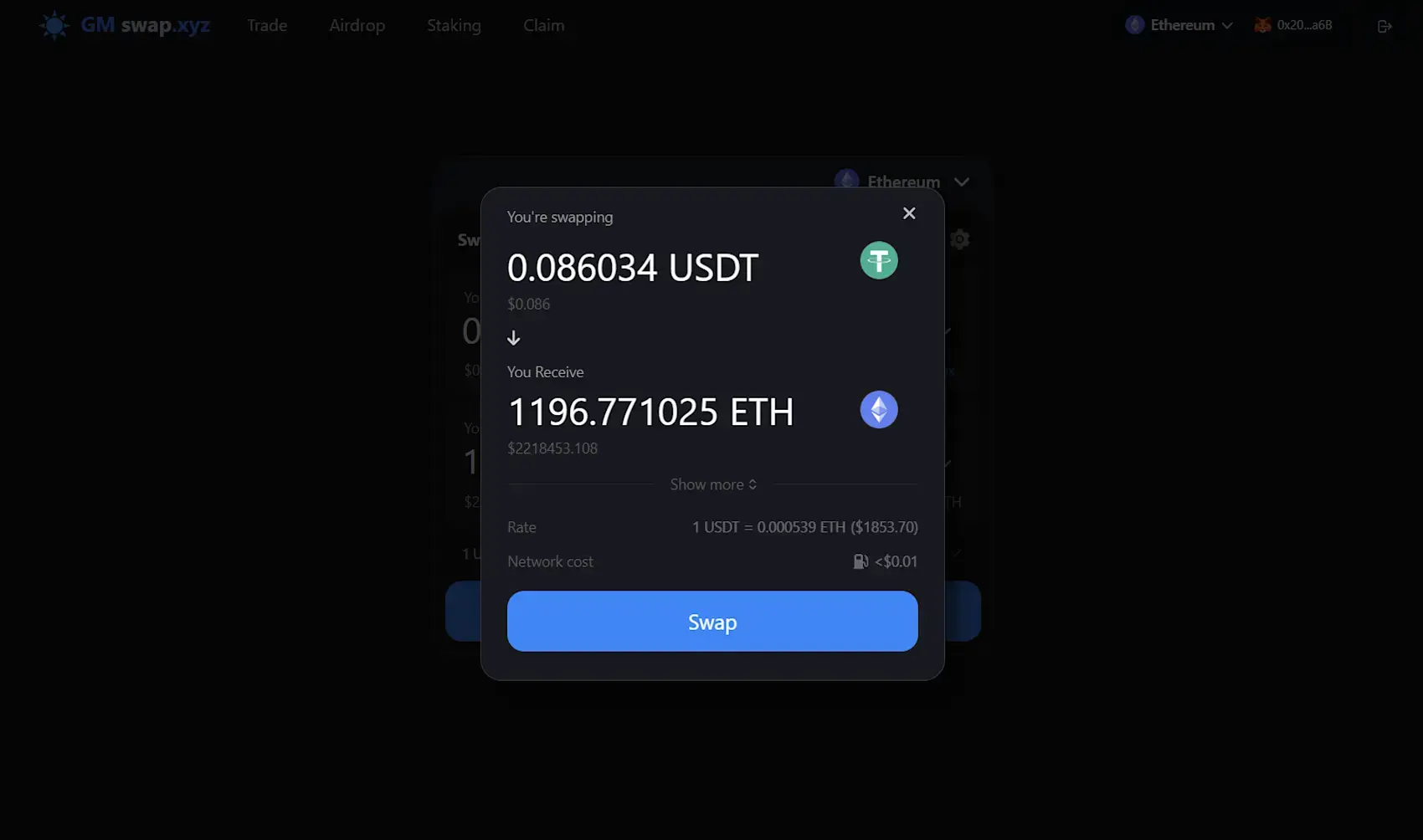
ERC-20 token swap dApp with MetaMask integration — live rate previews and gas estimation before you sign anything.
STRAIGHT ANSWERS
Which chain will you recommend?
The one your users and liquidity are on — EVM by default, because tooling and auditability are strongest there. We will argue against a chain picked for narrative reasons; gas economics, bridge risk and wallet support are part of the estimate, not an afterthought.
How do you price blockchain work?
Fixed price for well-scoped contracts — an escrow or a marketplace has a known shape. Time and materials for protocol work where the design is still moving. External audit fees are quoted separately and passed through at cost; we won't hide them in the build price.
Who owns the contracts and the keys?
You do. Code, deploy keys and admin multisig transfer to you at handover, with a runbook for every privileged operation. We keep signing access only if you retain us for operations — and even then behind your multisig, never as a single point of failure.
What happens after mainnet launch?
Contracts are immutable; everything around them isn't. We offer monitoring, incident response and upgrades to indexers, frontends and the WALLET SDK integration on a monthly retainer — or a clean handover to your team with documentation they can actually operate from.